- Microsoft’s AI-First Strategy in Windows 11
- Recall: A Feature That Shook User Trust
- Rumors of an AI Pullback
- Why Users Don’t Believe Microsoft—Yet
- The Business Pressure Behind the Shift
- Is Microsoft Truly Listening to Users?
- The Future of AI in Windows 11
- What Microsoft Needs to Do to Win Back Users
- Conclusion
- Frequently Asked Questions (FAQ)
- 1. Why are Windows 11 users skeptical about Microsoft’s promises?
- 2. Is Microsoft really reducing AI features in Windows 11?
- 3. What is Microsoft Copilot in Windows 11?
- 4. Why is Copilot controversial among users?
- 5. What is the Recall feature in Windows 11?
- 6. Why do users distrust the Recall feature?
- 7. Is Microsoft planning to remove Recall completely?
- 8. How does AI affect Windows 11 performance?
- 9. Will Microsoft stop developing AI for Windows 11?
- 10. What do Windows 11 users want most right now?
- 11. Is this skepticism unique to Windows 11?
- 12. What would restore user trust in Windows 11?
Microsoft has once again promised to improve Windows 11. This time, the focus is on fixing long-standing performance issues, reducing bugs, and—perhaps most controversially—scaling back the aggressive push of artificial intelligence features across the operating system. According to recent reports and rumors, Microsoft may be rethinking how deeply AI, particularly Copilot and other agent-based technologies, should be embedded into Windows 11.
However, many Windows 11 users are not convinced. After years of updates that introduced new features while leaving fundamental issues unresolved, skepticism has become the dominant reaction. A common sentiment circulating in online forums can be summed up in a single phrase: “I’ll believe it when I see it.”
This article explores why Windows 11 users are cynical about Microsoft’s promises, what the rumored AI pullback actually means, how Copilot and Recall have shaped public perception, and whether Microsoft is truly on the path to restoring trust in its flagship operating system.
The Rocky Reputation of Windows 11
Since its launch, Windows 11 has struggled to win over a significant portion of Windows users. While the operating system introduced a refreshed design, rounded corners, and a modernized interface, it also brought with it a host of problems that continue to affect its reputation.
Performance and Stability Concerns
Many users reported that Windows 11 felt slower than Windows 10, especially on older but still capable hardware. Complaints ranged from sluggish file explorer performance to unexplained CPU spikes and memory usage. For an operating system expected to represent the future of Windows, these issues felt like a step backward rather than forward.
Hardware Requirements and User Alienation
One of the most controversial aspects of Windows 11 was its strict hardware requirements. By enforcing TPM 2.0 and newer CPUs, Microsoft effectively locked out millions of users with older devices that were still functioning perfectly well. This decision created frustration and resentment, particularly among power users and businesses.
Update Fatigue
Frequent updates that sometimes introduced new bugs only deepened user dissatisfaction. Instead of feeling reassured by ongoing development, many users began to see Windows 11 updates as risky rather than beneficial.
Microsoft’s AI-First Strategy in Windows 11
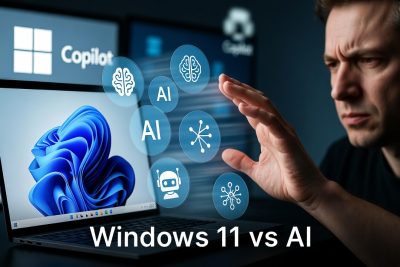
While Windows 11 was still dealing with basic usability and performance complaints, Microsoft doubled down on AI. The company made it clear that artificial intelligence would be central to the future of Windows.
Copilot Everywhere
Microsoft Copilot quickly became a central feature of Windows 11. Initially positioned as a helpful assistant, Copilot expanded rapidly across the operating system. Copilot buttons appeared in the taskbar, settings, and default applications such as Notepad and Paint.
For some users, Copilot felt useful. For many others, it felt intrusive.
The Push Toward Agentic AI
Microsoft’s vision goes beyond simple AI assistance. The company has spoken openly about an “agentic” future for Windows, where AI agents perform tasks autonomously, anticipate user needs, and manage workflows behind the scenes.
While ambitious, this vision raised concerns about control, transparency, and privacy.
Recall: A Feature That Shook User Trust
Perhaps no AI feature has damaged trust in Windows 11 more than Recall.
What Is Recall?
Recall is a deep search feature that continuously captures screenshots of user activity, allowing users to search their past actions using natural language. In theory, it promises powerful productivity benefits.
Privacy Backlash
In practice, Recall triggered immediate backlash. Users expressed alarm at the idea of their screens being constantly recorded, even if the data was stored locally. Concerns about sensitive information, security breaches, and misuse dominated discussions.
Microsoft’s Own Doubts
According to recent rumors, even Microsoft may now view Recall as a failure in its current form. Reports suggest that the feature could be heavily reworked, renamed, or potentially scrapped altogether.
Rumors of an AI Pullback
Recent reports indicate that Microsoft is reevaluating its AI strategy for Windows 11.
Fewer Copilot Buttons
One of the most notable rumored changes is a reduction in Copilot integration across the Windows interface. This includes removing or streamlining Copilot buttons in core apps such as Notepad and Paint.
A Pause on AI Expansion
There is also reportedly a temporary freeze on adding new AI features to default Windows 11 apps. This suggests Microsoft is taking a step back to reassess rather than charging forward blindly.
Rethinking Recall
Recall appears to be under serious internal review. While Microsoft may still believe in the concept of AI-powered search, it seems clear that the current implementation has failed to gain user trust.
Why Users Don’t Believe Microsoft—Yet
Despite these rumored changes, skepticism remains widespread.
A History of Broken Promises
Microsoft has promised to “fix Windows” many times before. Users remember similar assurances made during previous updates that failed to deliver meaningful improvements.
Fixing Fundamentals vs. Adding Features
A recurring criticism is that Microsoft prioritizes flashy new features over core stability. Many users want faster performance, fewer bugs, and better reliability—not more AI tools.
Trust Deficit
Once trust is lost, it is difficult to regain. Features like Recall have left users questioning Microsoft’s judgment and priorities.
The Business Pressure Behind the Shift
Microsoft’s potential AI pullback is not happening in a vacuum.
Slowing Windows 11 Adoption
Windows 11 adoption has reportedly stalled in some markets, with many users choosing to remain on Windows 10. This puts pressure on Microsoft to address the reasons why users are reluctant to upgrade.
Competition and Public Perception
Apple, Linux distributions, and even ChromeOS continue to position themselves as alternatives that prioritize simplicity and performance. Microsoft cannot afford to alienate its user base further.
Is Microsoft Truly Listening to Users?
There are signs that Microsoft may finally be responding to feedback.
Under-the-Hood Improvements
Recent updates suggest that Microsoft is working on performance optimizations and bug fixes that are not immediately visible but essential to long-term stability.
A More Cautious AI Approach
Rather than abandoning AI altogether, Microsoft appears to be adopting a more measured approach—at least for now.
The Future of AI in Windows 11
Despite the rumored pullback, AI is not going away.
Agentic AI Remains the End Goal
Microsoft still views AI agents as central to the future of Windows. The difference may lie in how quickly and aggressively these features are introduced.
Trust as the Key Factor
For AI to succeed in Windows 11, users must trust it. That means transparency, clear controls, and opt-in experiences rather than forced integration.
What Microsoft Needs to Do to Win Back Users
To rebuild confidence, Microsoft must:
- Prioritize performance and stability
- Give users meaningful control over AI features
- Communicate clearly and honestly
- Deliver improvements consistently, not just promise them
Conclusion
Microsoft’s rumored decision to scale back AI in Windows 11 may signal a turning point—but words and rumors are not enough. Windows 11 users have heard promises before, and many remain unconvinced.
If Microsoft truly wants to change the narrative, it must demonstrate real, measurable improvements. Until then, the prevailing attitude among users is likely to remain the same: “I’ll believe it when I see it.”
Only time—and action—will determine whether Microsoft can finally restore trust in Windows 11.
Frequently Asked Questions (FAQ)
1. Why are Windows 11 users skeptical about Microsoft’s promises?
Many users feel Microsoft has repeatedly promised fixes for performance and stability issues but instead prioritized new features, especially AI. Past experiences have made users cautious about believing announcements without real-world results.
2. Is Microsoft really reducing AI features in Windows 11?
According to recent rumors, Microsoft is reevaluating its AI strategy. This may include reducing Copilot integration in core apps and pausing the addition of new AI features, but nothing has been officially confirmed yet.
3. What is Microsoft Copilot in Windows 11?
Copilot is an AI assistant integrated into Windows 11 that helps users with tasks, settings, and content generation. However, many users feel its presence has become too aggressive and intrusive.
4. Why is Copilot controversial among users?
Users criticize Copilot for being pushed into too many parts of the operating system, often without clear benefits. Some also worry about privacy, performance impact, and lack of user control.
5. What is the Recall feature in Windows 11?
Recall is an AI-powered search feature that uses periodic screenshots of user activity to allow natural-language searching of past actions. It was intended to improve productivity but raised major privacy concerns.
6. Why do users distrust the Recall feature?
Recall continuously captures screenshots, which many users see as a security and privacy risk. Even though data is stored locally, trust in how the feature is handled remains low.
7. Is Microsoft planning to remove Recall completely?
Rumors suggest Microsoft is reconsidering Recall’s future. The feature may be redesigned, renamed, or possibly removed, but Microsoft is more likely to modify it rather than abandon the concept entirely.
8. How does AI affect Windows 11 performance?
Some users believe AI features consume system resources and distract from fixing core performance issues. This perception has fueled criticism that Microsoft is focusing on AI at the expense of stability.
9. Will Microsoft stop developing AI for Windows 11?
No. Microsoft still sees AI, especially agent-based systems, as the future of Windows. The rumored changes suggest a slower and more careful approach, not a complete rollback.
10. What do Windows 11 users want most right now?
Most users want better performance, fewer bugs, improved stability, and more control over features—especially AI—before Microsoft introduces additional functionality.
11. Is this skepticism unique to Windows 11?
No. Skepticism often arises when major software platforms change direction rapidly. However, Windows 11’s history of mixed updates has intensified user distrust.
12. What would restore user trust in Windows 11?
Consistent updates that clearly improve performance, transparent communication, optional AI features, and fewer broken promises would go a long way toward rebuilding trust.