

In today’s digital economy, laptops are not just productivity tools. They are development environments, AI terminals, creative studios, communication hubs, and personal data centers. But in 2026, a silent force is reshaping the entire hardware landscape: memory scarcity.
What began as a surge in AI infrastructure spending has evolved into what many industry analysts are calling “RAMageddon” a structural shift in global semiconductor allocation that is driving laptop prices sharply upward.
This is not a short-term spike caused by logistics issues or temporary demand cycles. It is a fundamental reallocation of manufacturing capacity toward AI data centers, high-bandwidth memory (HBM), and server-grade DDR5 modules. And the ripple effects are hitting consumers directly.
If you are planning to buy a laptop in 2026 or even in early 2027 understanding this memory crisis is essential.
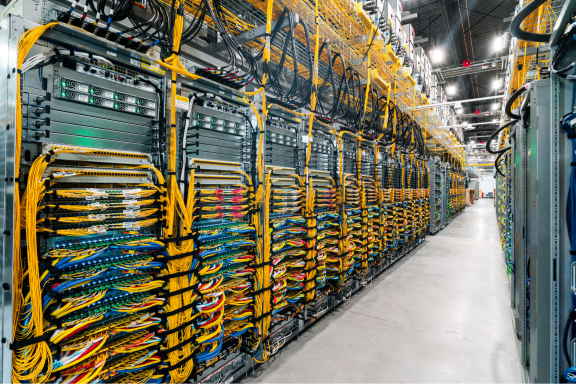
Understanding the Core Problem: Memory Is the New Oil
To understand why laptop prices are rising, we must first understand why memory has become one of the most valuable commodities in the technology supply chain.
Modern AI systems rely on:
-
Massive parallel computation
-
High-speed data movement
-
Large memory buffers
-
Persistent storage throughput
Training and running large language models, image generators, recommendation engines, and enterprise AI systems requires extraordinary amounts of DRAM and HBM.
While CPUs and GPUs receive public attention, memory is the true enabler of AI scale.
Without enough memory bandwidth and capacity, AI systems stall.
The AI Giants Are Locking Up Supply
In 2026, hyperscale AI companies are consuming an unprecedented percentage of global memory output.
Data center operators and AI infrastructure providers are pre-purchasing:
-
DDR5 server modules
-
High-Bandwidth Memory (HBM)
-
Advanced packaging capacity
-
Future wafer allocations
Instead of buying memory after production, these companies are contracting entire fabrication runs months or years in advance.
This creates two structural issues:
-
Reduced supply for consumer markets
-
Artificially tightened pricing power
When supply shrinks but demand remains stable — or grows — prices inevitably rise.
And consumer electronics are at the bottom of the allocation priority list.
The Big Three: A Concentrated Memory Market
Global DRAM manufacturing is dominated by three companies:
-
Samsung Electronics
-
SK Hynix
-
Micron Technology
Together, they control the vast majority of global DRAM production.
This concentration means:
-
Limited competition
-
Coordinated capacity shifts
-
Faster pricing alignment
-
Reduced consumer leverage
When these companies decide to shift capacity toward HBM or enterprise-grade DDR5, consumer laptop memory becomes a secondary priority.
Why DDR5 Prices Are Surging
DDR5 is the current-generation memory standard in most modern laptops.
Its advantages include:
-
Higher bandwidth
-
Improved power efficiency
-
Greater capacity support
-
Better parallelization
However, DDR5 production lines overlap with server-grade DDR5 and HBM production.
As AI demand grows, fabs are:
-
Retooling production lines
-
Prioritizing enterprise-grade chips
-
Allocating advanced nodes to AI memory
Consumer DDR5 modules are therefore facing supply compression.
The result?
Sharp price escalation — in some cases doubling within months.
The Ripple Effect: It’s Not Just RAM
Memory chips are embedded in more than just RAM modules.
They are essential components in:
-
Graphics cards (GDDR6 / GDDR7)
-
Solid-state drives (NAND flash)
-
Embedded laptop memory
-
Gaming consoles
-
Data center storage arrays
When DRAM capacity shifts toward AI, NAND capacity often shifts too — because manufacturers share fabrication resources.
The cost of NAND wafers has risen significantly.
SSDs are becoming more expensive.
Graphics cards are becoming more expensive.
And laptops — which integrate all three — are absorbing compounded price pressure.
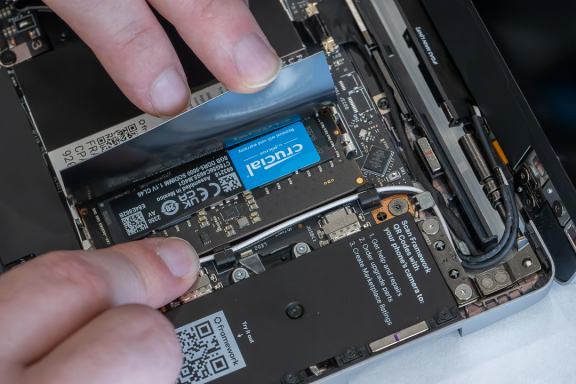
Why Laptops Are Especially Vulnerable
Unlike desktops, laptops integrate components tightly:
-
Soldered memory
-
Compact thermal designs
-
Embedded storage
-
Custom motherboard layouts
This reduces flexibility.
Manufacturers cannot easily swap cheaper components when shortages occur.
Laptop makers such as:
-
Dell
-
HP
-
Lenovo
-
Apple
must forecast memory pricing months ahead when designing new models.
When memory costs spike after production planning, margins shrink — or retail prices increase.
In 2026, manufacturers are choosing the latter.
How Different Laptop Categories Will Be Affected
1. Gaming Laptops
Gaming laptops are memory-intensive by design.
They typically ship with:
-
16GB minimum
-
32GB standard in premium models
-
64GB in high-end systems
As memory prices rise:
-
32GB configurations become luxury-tier
-
64GB systems become elite-priced
-
Entry gaming models creep upward in cost
Expect gaming laptops to experience some of the steepest increases.
2. Business Ultraportables
Ultraportable laptops increasingly use soldered memory.
This limits upgrade flexibility.
As a result:
-
8GB becomes entry baseline
-
16GB becomes mid-range ceiling
-
32GB becomes enterprise-only
Because memory cannot be upgraded later, consumers must pay higher prices upfront.
3. Budget Laptops and Chromebooks
Budget laptops typically ship with:
-
4GB or 8GB RAM
Even a 25–30% memory cost increase can significantly impact a $400–$600 device.
That $499 laptop may become $649.
In the sub-$500 category, expect:
-
Reduced availability
-
Lower memory configurations
-
More aggressive cost-cutting elsewhere
The SSD Factor
Consumers facing RAM constraints may turn to SSD swap usage.
Modern operating systems use virtual memory to compensate for limited RAM.
However:
-
SSD endurance suffers under heavy swap loads
-
NAND prices are rising too
-
High-speed PCIe Gen 4/5 SSDs are becoming costlier
Memory scarcity pushes demand toward SSDs.
SSD demand pushes NAND pricing higher.
The cycle reinforces itself.
The Long-Term Structural Shift
This is not a pandemic-style temporary bottleneck.
AI infrastructure is expanding permanently.
Cloud providers are:
-
Building new data centers
-
Upgrading memory capacity per rack
-
Deploying AI inference clusters
-
Expanding global AI services
Companies like:
-
OpenAI
-
Nvidia
-
Google
are locking in supply agreements years ahead.
This means consumer memory markets may remain secondary for an extended period.
Will Prices Ever Normalize?
Eventually, yes — but not quickly.
Semiconductor fabrication expansion takes:
-
Billions of dollars
-
Multi-year construction timelines
-
Advanced equipment lead times
New fabs cannot be built overnight.
Even when new capacity comes online, AI demand may absorb it.
Normalization could take:
-
2–4 years
-
Possibly longer if AI growth accelerates
Strategic Advice for Laptop Buyers in 2026
1. Buy Earlier Rather Than Later
If you know you need a laptop within 6–12 months, earlier purchase may save money.
Inventory purchased under older pricing contracts may still be in circulation.
2. Prioritize RAM Capacity
Choose:
-
16GB minimum for general productivity
-
32GB for creative or AI workloads
Avoid assuming future upgrades will be affordable.
3. Consider Upgradeable Models
Look for:
-
SO-DIMM slots
-
Modular memory designs
-
Brands supporting repairability
While rarer in 2026, they provide flexibility.
4. Evaluate Previous-Generation Models
A 2024 or 2025 model may:
-
Offer comparable performance
-
Use pre-crisis memory pricing
-
Provide strong value
But supply may diminish quickly.
The Psychological Impact of RAMageddon
Consumers are accustomed to:
-
Annual performance gains
-
Stable pricing
-
Occasional discounts
Memory scarcity disrupts that pattern.
We may enter a period where:
-
Laptop upgrades slow
-
Consumers hold devices longer
-
Secondary markets grow
-
Refurbished demand rises
The Broader Economic Implications
When computing becomes more expensive:
-
Small businesses delay upgrades
-
Students face higher entry barriers
-
Creative professionals see margin compression
-
AI development concentrates among large players
Memory scarcity reshapes digital accessibility.
Is This the End of Affordable Computing?
Not entirely.
Technology markets adapt.
Possible developments include:
-
Greater efficiency in memory utilization
-
Smarter compression algorithms
-
AI-optimized memory management
-
On-device inference optimization
-
Hybrid cloud-device workflows
But adaptation takes time.
And in the short to medium term, higher prices are the reality.
Final Thoughts: A New Era of Hardware Economics
RAMageddon is not hype.
It reflects a deeper shift:
Memory is no longer just a component — it is strategic infrastructure.
As AI systems consume vast quantities of DRAM and HBM, consumer hardware markets must compete for remaining capacity.
Laptop prices in 2026 are rising not because of poor design or brand greed — but because global semiconductor economics have changed.
The next few years will likely bring:
-
Higher baseline laptop prices
-
Reduced entry-level options
-
Greater premium segmentation
-
Longer device lifecycles
For buyers, the strategy is clear:
Be informed.
Be proactive.
Buy with future needs in mind.
Because in the era of AI-driven hardware demand, memory is power and power is expensive.
Frequently Asked Questions (FAQ) – RAMageddon and Rising Laptop Prices in 2026
1. What is “RAMageddon”?
“RAMageddon” refers to the ongoing global memory supply crisis caused by AI infrastructure demand consuming a large share of DRAM and high-bandwidth memory (HBM) production. As AI data centers expand, consumer-grade memory availability shrinks, pushing prices higher for laptops, desktops, graphics cards, and SSDs.
2. Why are laptop prices increasing in 2026?
Laptop prices are rising primarily because memory (RAM) and storage components have become significantly more expensive. AI companies are locking in large memory supply contracts, leaving less production capacity for consumer electronics. Since RAM and SSDs are core components in laptops, higher component costs directly increase retail prices.
3. Is this just a temporary price spike?
Unlikely. Unlike short-term supply chain disruptions, this crisis is structural. AI infrastructure growth is long-term, and semiconductor manufacturing expansion takes years. Most analysts expect elevated pricing to continue for at least 2–4 years.
4. Which companies control most of the memory production?
The global DRAM market is largely dominated by:
-
Samsung Electronics
-
SK Hynix
-
Micron Technology
Because production is concentrated among these three manufacturers, shifts toward AI memory allocation significantly impact global pricing.
5. How does AI increase RAM demand?
AI systems require enormous amounts of high-speed memory for:
-
Model training
-
Real-time inference
-
Parallel processing
-
Data buffering
Companies such as OpenAI and Nvidia operate large AI clusters that consume massive volumes of DRAM and HBM, reducing availability for consumer markets.
6. Are only high-end laptops affected?
No. While high-memory laptops (32GB and 64GB) are hit hardest, even entry-level devices are affected. Budget systems often operate on thin margins, so a 20–30% component increase can significantly raise retail pricing.
7. Will SSD prices also rise?
Yes. Many DRAM manufacturers also produce NAND flash memory used in SSDs. When production capacity shifts toward AI memory, NAND supply tightens as well, increasing SSD costs.
8. Should I buy a laptop now or wait?
If you plan to buy within the next 6–12 months, purchasing sooner may save money. Existing inventory may still reflect pre-crisis component pricing. Waiting could mean facing higher baseline costs.
9. Is 16GB RAM still enough in 2026?
For general productivity, 16GB remains sufficient. However:
-
Creative professionals
-
Developers
-
AI users
-
Gamers
may benefit from 32GB. Given rising prices and soldered memory trends, it’s wise to choose the right capacity at purchase.
10. Are gaming laptops impacted more than others?
Yes. Gaming laptops rely heavily on:
-
System RAM
-
Graphics memory (GDDR6/GDDR7)
-
High-speed storage
Since both DRAM and graphics memory prices are increasing, gaming systems are particularly vulnerable to price hikes.
11. Why are some laptops using soldered memory?
Manufacturers solder memory to:
-
Save space
-
Improve thermal efficiency
-
Reduce production complexity
However, this limits upgrade flexibility. During a memory crisis, soldered designs force consumers to pay higher prices upfront for larger configurations.
12. Will affordable laptops disappear?
Not entirely, but selection may shrink. Sub-$500 laptops may:
-
Offer lower memory (4GB or 8GB)
-
Compromise on performance
-
Use older processors
Entry-level pricing tiers may shift upward overall.
13. How long will it take for prices to normalize?
New semiconductor fabrication plants require billions of dollars and years to complete. Even once operational, AI demand may absorb new capacity. Realistically, stabilization could take several years.
14. Can refurbished laptops be a good alternative?
Yes. Refurbished or previous-generation laptops may provide strong value, especially if purchased before secondary markets adjust to rising component demand.
15. Will this affect MacBooks and premium brands too?
Yes. Brands like Apple may temporarily buffer increases due to inventory management, but long-term component pricing affects all manufacturers.
16. What’s the smartest buying strategy right now?
-
Buy sooner rather than later if possible
-
Choose sufficient RAM upfront
-
Consider upgradeable models
-
Compare previous-generation devices
-
Avoid underpowered configurations
Planning for both present and future workloads is critical.
17. Is this the new normal for computing?
We are entering a new phase where memory is strategic infrastructure rather than a commodity component. While markets eventually rebalance, AI-driven demand may permanently raise baseline hardware costs compared to previous years.