Apple’s long-anticipated transformation of Siri into a next-generation AI assistant appears to be facing yet another delay. According to reporting from Mark Gurman at Bloomberg, internal technical challenges are once again pushing back the rollout of Apple’s revamped, AI-powered version of Siri.
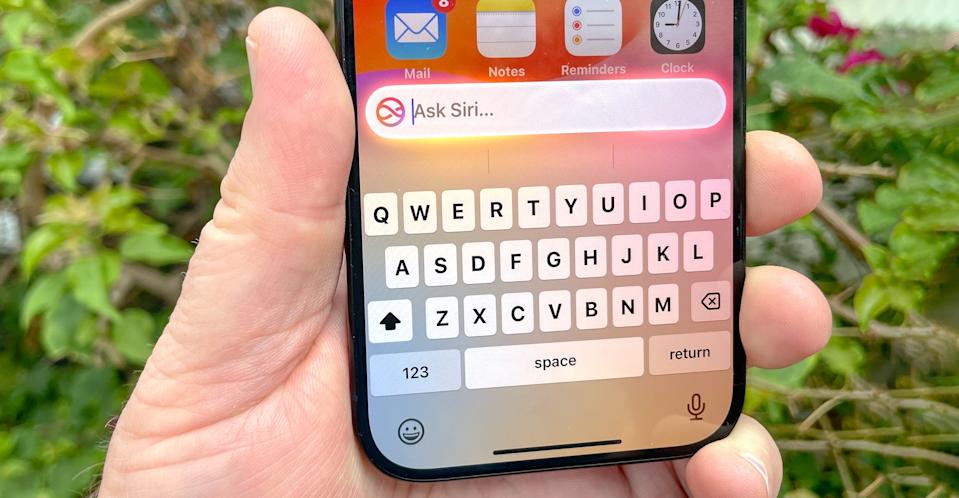
Originally introduced as part of the company’s broader artificial intelligence initiative branded as Apple Intelligence, the next-generation Siri was positioned as a foundational shift in how users interact with their devices. Rather than functioning as a basic voice assistant limited to simple commands, the upgraded Siri was expected to behave more like advanced large language model (LLM) systems such as ChatGPT or Claude—while remaining deeply integrated into Apple’s ecosystem of iPhone, Mac, iPad, and beyond.
However, as the AI arms race accelerates globally, Apple’s cautious, privacy-first approach appears to be complicating timelines.
This article explores the reported delay in depth—analyzing technical challenges, competitive pressures, architectural constraints, privacy considerations, strategic implications, and what this means for users and investors alike.
1. The Promise of a New Era for Siri
When Siri launched in 2011, it was revolutionary. It introduced mainstream consumers to the idea of speaking naturally to their smartphones. At the time, voice commands for setting alarms, sending messages, and checking the weather felt futuristic.
Over the years, however, Siri’s capabilities stagnated compared to competitors. As generative AI matured, expectations shifted dramatically. Modern users now expect assistants to:
-
Understand context across conversations
-
Perform multi-step reasoning
-
Draft complex responses
-
Generate content
-
Summarize information
-
Interpret ambiguous language
-
Maintain conversational memory
Apple’s announcement of “Apple Intelligence” in 2024 signaled that the company recognized this shift. Siri would no longer remain a simple task-execution assistant—it would evolve into a contextual AI companion embedded deeply across Apple’s ecosystem.
The vision included:
-
Context-aware interactions across apps
-
Natural conversational responses
-
Personalization based on user behavior
-
On-device AI processing
-
Seamless cross-device intelligence
In short, Siri was meant to transform from reactive assistant into proactive digital partner.
2. What Exactly Is Being Delayed?
According to Gurman’s reporting, Apple has encountered significant internal testing issues related to the new AI-powered Siri.
Earlier speculation suggested the overhaul could debut alongside iOS 26.4 in March. Now, the rollout may occur in stages:
-
Limited AI features in a mid-year update
-
Expanded functionality in May
-
Full release potentially delayed until iOS 27 in September
These delays are not minor adjustments. They represent a substantial shift in Apple’s AI roadmap.
Importantly, this is not the first postponement. The enhanced Siri has reportedly been in development for over 18 months, reflecting the complexity of integrating generative AI into a consumer operating system used by hundreds of millions globally.
3. The Technical Complexity Behind Generative AI Integration
At first glance, adding AI to Siri might seem straightforward—after all, competitors have already integrated advanced models into consumer products.
However, Apple faces unique architectural challenges.
3.1 On-Device vs Cloud-Based AI
Many AI chatbots rely heavily on cloud-based processing. Queries are sent to powerful data center servers where large models generate responses.
Apple, by contrast, prioritizes:
-
On-device computation
-
Minimal data retention
-
Privacy-preserving architecture
Running LLM capabilities locally requires significant optimization. Devices must balance:
-
Battery efficiency
-
Heat management
-
Storage constraints
-
Latency
-
Security
Building a hybrid system—where some AI runs locally and other parts run in secure private cloud environments—adds further engineering complexity.
3.2 System-Level Integration
Unlike standalone apps, Siri operates at the operating system level.
It must interact with:
-
Messaging apps
-
Calendar
-
Photos
-
Safari
-
Notes
-
System settings
-
Third-party applications
Adding generative AI means enabling contextual understanding across these domains without compromising system stability.
Even small bugs could affect millions of users.
3.3 Conversational Memory & Personal Context
To compete with tools like ChatGPT, Siri must understand:
-
Previous prompts
-
User preferences
-
App usage patterns
-
Cross-session context
But Apple’s privacy model restricts how much personal data can be stored or transmitted.
Balancing personalization with privacy may be one of the biggest technical challenges causing delays.
4. Competitive Landscape: Why Timing Matters
While Apple refines its AI roadmap, competitors are moving aggressively.
-
Google has embedded Gemini across Android and search.
-
Microsoft has integrated AI into Windows and Office products.
-
OpenAI continues expanding ChatGPT’s multimodal capabilities.
These companies are pushing frequent updates and rapidly iterating.
Apple, historically, prioritizes stability and user trust over speed.
However, in the AI era, delay carries risk.
Consumers are beginning to expect:
-
AI-generated summaries
-
Smart writing assistance
-
Context-aware automation
-
Conversational OS-level control
If Siri fails to evolve at comparable speed, Apple risks perception that it lags behind in AI innovation.
5. Why Apple’s Cautious Approach May Be Strategic
While delays may frustrate users, Apple’s deliberate pace could be intentional.
Historically, Apple does not aim to be first—it aims to be polished.
Examples include:
-
Smartphones (not first, but refined)
-
Tablets (not first, but dominant)
-
Smartwatches (not first, but category leader)
Apple often waits until technology matures before delivering a cohesive, stable experience.
With generative AI, the risks are high:
-
Hallucinated responses
-
Inaccurate outputs
-
Privacy breaches
-
Misuse of personal data
A rushed rollout could damage Apple’s brand more than a delayed one.
6. Privacy as a Core Constraint
Apple has built its brand around privacy.
Its AI integration strategy reportedly includes:
-
On-device processing for simpler tasks
-
Private cloud compute for advanced queries
-
Encrypted transmission
-
No long-term storage of user prompts
This privacy-first architecture differentiates Apple from many AI competitors—but it also complicates engineering.
Building powerful AI without centralized data aggregation is extremely challenging.
7. The Risk of Fragmented Rollouts
If features are released gradually, users may encounter:
-
Inconsistent functionality
-
Confusion over available capabilities
-
Partial AI responses
-
Regional differences
Fragmented releases can dilute the “wow” factor of a major upgrade.
However, staged rollouts also reduce systemic risk.
8. Investor and Market Implications
AI is now viewed as a primary growth driver in technology.
Investors closely monitor:
-
AI adoption rates
-
Monetization strategies
-
Platform competitiveness
If Apple’s AI integration appears delayed relative to peers, analysts may question long-term positioning.
However, Apple’s massive installed base provides leverage:
-
Over 1 billion active iPhones
-
Deep ecosystem loyalty
-
Hardware-software integration advantage
When Apple does fully deploy generative AI across devices, adoption could scale rapidly.
9. User Experience Expectations in 2026 and Beyond
Modern users increasingly expect AI to:
-
Draft emails
-
Rewrite text
-
Summarize documents
-
Generate images
-
Interpret photos
-
Perform complex automation
For Siri to remain relevant, it must go beyond simple command execution.
Future expectations include:
-
Contextual awareness across devices
-
Multimodal understanding (voice, text, image)
-
Cross-app orchestration
-
Proactive suggestions
Delivering these features without compromising performance or privacy remains Apple’s central challenge.
10. Possible Reasons Behind Testing Issues
Though Apple has not officially confirmed specifics, plausible causes include:
-
Model accuracy inconsistencies
-
Latency issues
-
Cross-app permission conflicts
-
Battery performance degradation
-
Edge-case conversation failures
-
Multilingual optimization challenges
Given Apple’s global user base, AI must perform consistently across languages, dialects, and regions.
11. Long-Term Outlook: Will the Delay Pay Off?
Delays do not necessarily indicate weakness.
They may signal:
-
Rigorous quality control
-
Responsible AI deployment
-
Infrastructure scaling
-
Enterprise-level testing
If Apple succeeds in delivering a stable, privacy-centric AI assistant deeply embedded across hardware, it could redefine expectations for device-based intelligence.
12. The Broader AI Ecosystem Impact
Siri’s evolution could influence:
-
App development standards
-
AI API ecosystems
-
Device-level automation
-
Edge computing innovation
-
Privacy-centric AI architecture
Apple’s approach may push the industry toward hybrid AI models combining local and cloud processing.
13. Final Analysis
Apple’s reported delay of its AI-powered Siri reflects the extraordinary complexity of merging generative AI with a privacy-focused consumer ecosystem.
While competitors prioritize speed, Apple appears focused on:
-
Stability
-
Privacy
-
Seamless integration
-
Long-term reliability
The delay underscores that building AI into an operating system at global scale is far more complex than launching a standalone chatbot.
If Apple delivers on its vision—even if later than expected—the result could represent one of the most significant upgrades in the company’s history.
Until then, users may see incremental AI enhancements rather than a single dramatic transformation.
The AI assistant race is accelerating—but Apple’s strategy suggests it intends not merely to compete, but to redefine the standard.
Frequently Asked Questions (FAQ)
Apple’s Reported Delay of the AI-Powered Siri Overhaul
Below are the most common questions readers have regarding the reported delay of Apple’s next-generation AI assistant.
1. Why did Apple Inc. delay the new AI-powered Siri?
According to reporting from Mark Gurman at Bloomberg, Apple is facing internal technical challenges during testing.
The complexity of integrating generative AI into a privacy-focused operating system appears to be the main reason behind the delay. Issues may involve system stability, AI accuracy, cross-app integration, and performance optimization.
Apple traditionally avoids releasing unfinished or unstable features, which likely contributes to the postponement.
2. What is Apple Intelligence?
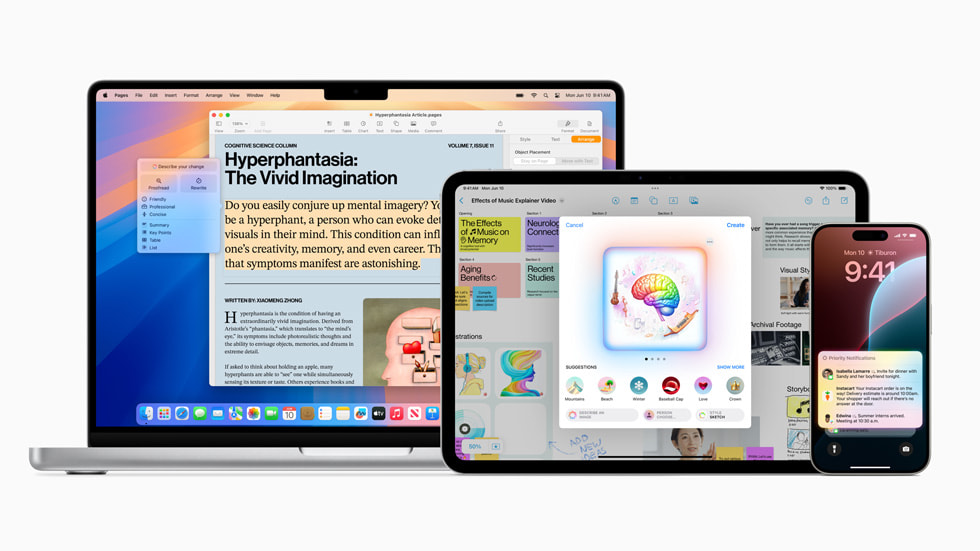
Apple Intelligence is Apple’s broader artificial intelligence initiative introduced in 2024. It aims to bring generative AI capabilities across iPhone, iPad, and Mac devices.
The project includes:
-
Context-aware Siri improvements
-
On-device AI processing
-
Writing and summarization tools
-
Intelligent system-level automation
The revamped Siri is considered a core component of this strategy.
3. How will the new Siri be different from the current version?
The upgraded Siri is expected to function more like advanced large language model systems such as ChatGPT or Claude.
Expected improvements include:
-
More natural conversations
-
Multi-step reasoning
-
Context retention across apps
-
Deeper system integration
-
Improved personalization
Instead of simple command execution, Siri would become a conversational AI assistant.
4. When is the new AI-powered Siri expected to launch?
Initial expectations suggested a rollout alongside a mid-year iOS update. However, the latest reports indicate that:
-
Some features may launch gradually
-
Expanded updates could arrive later in the year
-
A full release might be postponed until a major iOS update cycle
Apple has not officially confirmed a final release date.
5. Is this the first delay?
No.
The upgraded Siri has reportedly been in development for over a year and a half. This marks another postponement in what has been a longer-than-expected development timeline.
The repeated delays reflect the technical difficulty of integrating generative AI deeply into a consumer operating system used globally.
6. Why is integrating generative AI so complex?
Generative AI systems require:
-
High computational power
-
Large model optimization
-
Consistent performance across languages
-
Secure data handling
-
Seamless cross-app interaction
Unlike standalone AI apps, Siri operates at the operating system level. Any malfunction could affect millions of users.
Apple also prioritizes privacy, which adds architectural constraints.
7. Is Apple using external AI models like Google Gemini?
Reports have suggested that Apple explored partnerships or integrations comparable to technologies like Google Gemini.
However, Apple is also developing internal AI models and a hybrid system combining on-device processing with private cloud computing.
The exact technical configuration has not been fully disclosed.
8. Does this delay mean Apple is behind in AI?
Not necessarily.
Apple often prioritizes:
-
Stability
-
Privacy
-
Long-term ecosystem integration
While competitors may release AI features faster, Apple typically focuses on delivering polished and tightly integrated experiences.
The delay may reflect quality control rather than lack of capability.
9. Will the delay affect current Siri functionality?
No.
Current Siri features remain available and functional. Users may see incremental AI enhancements in smaller updates before the full generative AI experience is launched.
10. How does privacy factor into the delay?
Apple’s brand is built on privacy. The company reportedly emphasizes:
-
On-device AI processing
-
Encrypted data transmission
-
Limited data retention
-
Private cloud compute infrastructure
Balancing advanced AI capabilities with strict privacy standards significantly increases development complexity.
11. Could the delay impact Apple’s competitive position?
Possibly.
AI is currently a major competitive battleground among tech companies. Delays may raise concerns among investors or users about Apple’s pace of innovation.
However, Apple’s massive device ecosystem means that once the AI assistant is fully deployed, adoption could scale rapidly.
12. What can users expect in the meantime?
Users may experience:
-
Gradual AI feature rollouts
-
Incremental Siri improvements
-
Writing and summarization tools
-
Better contextual suggestions
A full conversational AI overhaul may arrive later as part of a larger system update.
13. Is Apple abandoning the AI-powered Siri project?
No.
There is no indication that Apple is canceling the project. The delay suggests ongoing development rather than termination.
The company remains heavily invested in AI integration across its ecosystem.
14. Why doesn’t Apple just release a beta version?
Apple historically avoids releasing highly experimental system-level features at scale.
Because Siri interacts deeply with core operating system components, instability could affect:
-
Messaging
-
Calls
-
App functionality
-
Device performance
Apple typically prioritizes reliability before wide deployment.
15. What does this mean for the future of AI assistants?
The delay highlights a broader industry reality: integrating generative AI at operating system scale is far more complex than deploying standalone chatbots.
If Apple succeeds in delivering a stable, privacy-centric AI assistant deeply embedded across devices, it could redefine expectations for digital assistants.
The AI race continues—but quality and trust may ultimately matter more than speed.