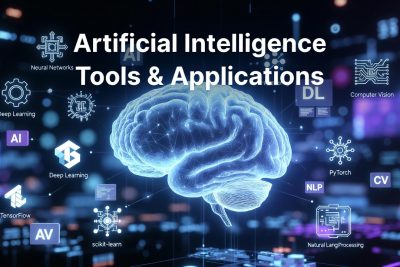

Artificial Intelligence, or AI, is one of the most transformative technologies of our era. From self-driving cars to virtual assistants, AI is everywhere—changing the way we live, work, and interact with the world. But for many people, AI still feels complex, abstract, or even intimidating. This article breaks down the essentials of AI in simple, practical terms, explaining how it works, why it matters, and how it can be used in everyday life and professional settings.
What is Artificial Intelligence?
Artificial Intelligence refers to the development of computer systems capable of performing tasks that usually require human intelligence. These tasks include learning, reasoning, problem-solving, understanding language, recognizing patterns, and making decisions.
In essence, AI is about creating machines that can “think” and adapt. Unlike traditional software, which follows strict rules and logic, AI can learn from experience and improve over time. This learning ability is what makes AI both powerful and versatile.
AI in Everyday Life
Many people interact with AI daily without realizing it. Examples include:
-
Voice assistants like Siri, Alexa, and Google Assistant
-
Search engines like Google or Bing that understand queries and rank results
-
Streaming platforms like Netflix and Spotify that recommend content based on user preferences
-
Navigation apps like Google Maps that predict traffic patterns
-
Online shopping recommendations that suggest products you might like
AI is not a futuristic concept; it is already integrated into our digital lives, making experiences faster, smarter, and more personalized.
How Does AI Work?
AI systems rely on data and algorithms to “learn” and perform tasks. Think of it as teaching a child to ride a bike: with practice, observation, and feedback, the child gradually improves. Similarly, AI improves by analyzing datasets, identifying patterns, and applying rules to make decisions.
Key Components of AI
-
Data – AI systems need large datasets to learn patterns and make predictions.
-
Algorithms – A set of rules that tells AI how to analyze data and solve problems.
-
Computing Power – AI requires significant processing resources to analyze complex datasets quickly.
-
Feedback Loops – Continuous learning from success and failure helps AI improve over time.
AI can operate in two primary ways:
-
Supervised Learning – AI is trained with labeled examples (e.g., images labeled as “cat” or “dog”).
-
Unsupervised Learning – AI identifies patterns without labeled data, discovering hidden insights.
-
Reinforcement Learning – AI learns through trial and error, improving its performance based on rewards or penalties.
AI Terminology Explained
AI comes with technical jargon, but it’s easier to understand than it sounds. Here’s a breakdown of key terms:
Large Language Models (LLMs)
LLMs are AI systems trained to understand and generate human-like text. They can answer questions, write articles, and even engage in natural conversations. Examples include GPT models and ChatGPT. LLMs are widely used in content creation, customer support, and virtual assistance.
Machine Learning
Machine learning (ML) is a subset of AI that allows systems to learn from data and improve performance without explicit programming. For instance, ML helps computers recognize cats in images by training on thousands of labeled photos.
Deep Learning
Deep learning is a specialized form of machine learning that uses neural networks to process complex data. It is highly effective in tasks like image recognition, natural language processing, and speech recognition.
Neural Networks
Neural networks are inspired by the human brain. They consist of layers of nodes (neurons) that process information and recognize patterns. Neural networks are essential for deep learning and complex AI tasks.
Natural Language Processing (NLP)
NLP allows AI to understand, interpret, and generate human language. It powers chatbots, voice assistants, translation tools, and sentiment analysis systems.
Big Data
Big data refers to massive datasets used by AI to detect patterns, make predictions, and improve decision-making. Examples include customer purchase histories, sensor data, or social media activity.
Algorithms
An algorithm is a step-by-step procedure for solving problems. In AI, algorithms determine how the system analyzes data, identifies patterns, and produces results.
Applications of AI in Real Life
AI is no longer just a theoretical concept; it is used in numerous industries to improve efficiency, productivity, and decision-making.
Healthcare
AI helps doctors analyze medical images, predict patient outcomes, and design personalized treatment plans. For instance, AI can detect early signs of diseases like cancer with high accuracy.
Finance
AI systems detect fraud, manage risk, automate trading, and provide personalized financial advice. Banks use AI to improve customer service through chatbots and predictive analytics.
Retail
E-commerce platforms use AI to recommend products, optimize pricing, and improve supply chain logistics. Personalized recommendations increase customer satisfaction and sales.
Transportation
AI powers self-driving cars, traffic management systems, and logistics optimization. Companies like Tesla and Waymo rely on AI to enhance safety and efficiency.
Workplace Productivity
AI tools like Rovo integrate with project management software like Jira and Confluence to automate repetitive tasks, analyze data, and provide intelligent insights. Teams can collaborate more efficiently and focus on high-value work.
Ethical Considerations in AI
While AI offers numerous benefits, it also raises ethical concerns:
-
Bias in AI – AI systems can inherit biases present in the training data, leading to unfair outcomes.
-
Privacy – AI often relies on large amounts of personal data, which must be protected.
-
Job Displacement – Automation could replace certain jobs, necessitating workforce adaptation and reskilling.
-
Transparency – Decisions made by AI should be explainable to prevent misuse or unintended consequences.
Ethical AI development requires careful monitoring, responsible data usage, and accountability.
How to Learn AI
Learning AI is more accessible than ever. Here’s how to get started:
-
Online Courses – Platforms like Coursera, edX, and Udemy offer AI courses for beginners and professionals.
-
Books – Introductory books on AI, machine learning, and neural networks provide foundational knowledge.
-
Hands-On Practice – Use tools like Python, TensorFlow, and PyTorch to implement AI projects.
-
Community Involvement – Join forums, webinars, and AI communities to stay updated on trends and best practices.
Future of AI
AI is evolving rapidly and will continue to influence all aspects of life. Expected future trends include:
-
More Human-Like Interaction – AI will become more conversational and context-aware.
-
Smarter Automation – AI will handle complex workflows across industries.
-
AI in Creativity – AI-generated art, music, and writing will become mainstream.
-
Ethical AI Regulation – Governments and organizations will develop standards to ensure safe and fair AI use.
Artificial Intelligence is not just a buzzword; it is a transformative force reshaping the modern world. Understanding AI, its applications, and its limitations is crucial for individuals, businesses, and society. From automating repetitive tasks to analyzing massive datasets and enhancing creativity, AI provides tools that make our lives easier and more productive.
Whether you are a beginner looking to learn about AI or a professional seeking to integrate AI into your workflow, understanding the basics is the first step. By staying informed and ethical, we can harness the power of AI responsibly to drive innovation and progress.
FAQ (Frequently Asked Questions)
Q1: What is Artificial Intelligence (AI)?
A1: Artificial Intelligence is the development of computer systems that can perform tasks that normally require human intelligence, such as understanding language, recognizing images, making decisions, and solving problems.
Q2: How does AI work?
A2: AI works by learning from data. Using algorithms, it identifies patterns in datasets and improves over time, much like humans learn from experience.
Q3: What are Large Language Models (LLMs)?
A3: LLMs are AI systems designed to understand and generate human-like text. They can answer questions, write articles, and assist in communication tasks.
Q4: What is the difference between machine learning and deep learning?
A4: Machine learning allows computers to learn patterns from data, while deep learning uses complex neural networks to process large amounts of data and achieve higher accuracy in tasks such as image recognition and natural language processing.
Q5: How is AI used in everyday life?
A5: AI is integrated into search engines, streaming recommendations, voice assistants, smart devices, and workflow tools to make tasks faster, more efficient, and personalized.
Q6: What is Rovo and how does it use AI?
A6: Rovo is a suite of AI tools integrated into workplace software like Jira and Confluence. It automates repetitive tasks, provides insights, and enhances team collaboration.
Q7: What is natural language processing (NLP)?
A7: NLP is a branch of AI that helps computers understand, interpret, and generate human language, powering tools like chatbots and virtual assistants.
Q8: What are datasets and why are they important for AI?
A8: Datasets are collections of information AI uses to learn patterns. The more high-quality data AI has, the better it can learn and make accurate predictions.
Q9: What is SQL and JQL in AI applications?
A9: SQL is a programming language for querying databases, while JQL (Jira Query Language) allows users to filter and manage tasks efficiently in Jira.
Q10: Is AI safe to use in the workplace?
A10: Yes, AI tools are safe when properly implemented. They can improve productivity, reduce errors, and assist with decision-making, but it’s important to understand how AI processes data and ensures privacy.