Harnessing Generative AI in Project Management: 3 Key Drivers for Transformative Success
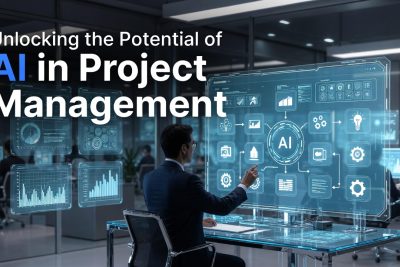
Generative AI is redefining how project managers operate, plan, and innovate. By leveraging AI’s learning, adaptation, and content generation capabilities, managers can go beyond conventional approaches to planning, risk management, and decision-making. However, successful AI integration depends not just on technology, but on human and organizational factors.
This article explores three critical drivers behind effective AI adoption in project management—Innovation Attitude, Peer Influence, and Task-Technology Fit—and provides actionable strategies for organizations looking to maximize their AI impact.
Understanding AI Appropriation in Project Management
Generative AI tools are powerful, but their value depends on how project managers appropriate them—adapting their usage creatively beyond original design. Research from the University of Calabria and other institutions highlights two key outcomes from effective appropriation:
-
Unfaithfulness of Appropriation (UFOA): How users explore novel uses of AI tools beyond their intended design.
-
Creative Behavior (CB): The generation of new ideas or solutions through AI integration.
The Three Key Drivers of AI Adoption
1. Innovation Attitude: The Internal Engine for Creative Use
Innovation Attitude refers to an individual’s openness to new ideas, technologies, and approaches. Project managers with high Innovation Attitude are more likely to explore AI tools creatively, challenge traditional workflows, and implement innovative solutions.
Key insights:
-
Drives both methodological and outcome-based innovation.
-
Encourages experimentation beyond standard AI features.
-
Essential for organizations seeking maximal value from AI integration.
2. Peer Influence: Creating a Social Climate for Innovation
Peer Influence reflects how colleagues and industry peers shape technology adoption. Observing successful AI applications by peers inspires managers to experiment and adopt creative practices.
Key insights:
-
Encourages exploration beyond mechanical usage.
-
Peer-led innovation sets benchmarks and best practices.
-
Promotes knowledge sharing and collaboration across teams.
3. Task-Technology Fit: Aligning AI Tools to Project Needs
Task-Technology Fit measures how well a tool aligns with the specific demands of a task. A strong fit ensures AI tools complement workflows, increasing the likelihood of creative appropriation and enhanced performance.
Key insights:
-
Enhances confidence and fluency in tool usage.
-
Maximizes value by focusing on scenario-specific applications.
-
Avoid adopting AI tools solely for novelty; prioritize real task alignment.
Actionable Strategies for Organizations
-
Foster an Innovation Mindset:
Invest in AI literacy programs, bootcamps, and training initiatives to cultivate curiosity and openness. -
Enable Peer Learning:
Create platforms for knowledge exchange, AI best practice showcases, and cross-team collaboration to encourage adoption. -
Prioritize Task-Driven Implementation:
Conduct task-level assessments to identify where AI adds the most value and deploy tools accordingly. -
Encourage Flexible AI Appropriation:
Allow managers to explore non-linear uses of AI to unlock hidden potential and creative solutions.
How UMU Supports AI Integration in Project Management
UMU helps organizations integrate Generative AI through role-specific courses that emphasize practical application over theory. Partnering with top universities, UMU translates academic insights into actionable workplace strategies, helping organizations boost AI literacy, creativity, and productivity.
Highlights:
-
AI literacy programs tailored for managers and teams.
-
Scenario-based training to maximize AI adoption impact.
-
Guidance on cultivating innovation and creative AI use.
FAQs about Generative AI in Project Management
Q1: What is Generative AI and how is it used in project management?
A: Generative AI is a technology that creates content, predicts outcomes, and provides insights by learning from data. In project management, it aids in planning, risk assessment, resource allocation, and creative problem-solving.
Q2: Why is Innovation Attitude important for AI adoption?
A: Innovation Attitude drives curiosity, experimentation, and the creative use of AI tools, enabling project managers to achieve superior results beyond standard functionalities.
Q3: How does Peer Influence impact AI use?
A: Observing colleagues successfully use AI encourages others to experiment, adopt best practices, and integrate tools more creatively.
Q4: What is Task-Technology Fit and why does it matter?
A: Task-Technology Fit ensures AI tools align with the specific demands of tasks, increasing the likelihood of effective and creative adoption.
Q5: Can AI replace project managers?
A: No. AI is a tool to enhance human decision-making, creativity, and efficiency, but project managers’ judgment and expertise remain essential.
Q6: How can organizations implement AI effectively?
A: By fostering innovation, enabling peer learning, ensuring task-tool alignment, and promoting flexible appropriation of AI solutions.